
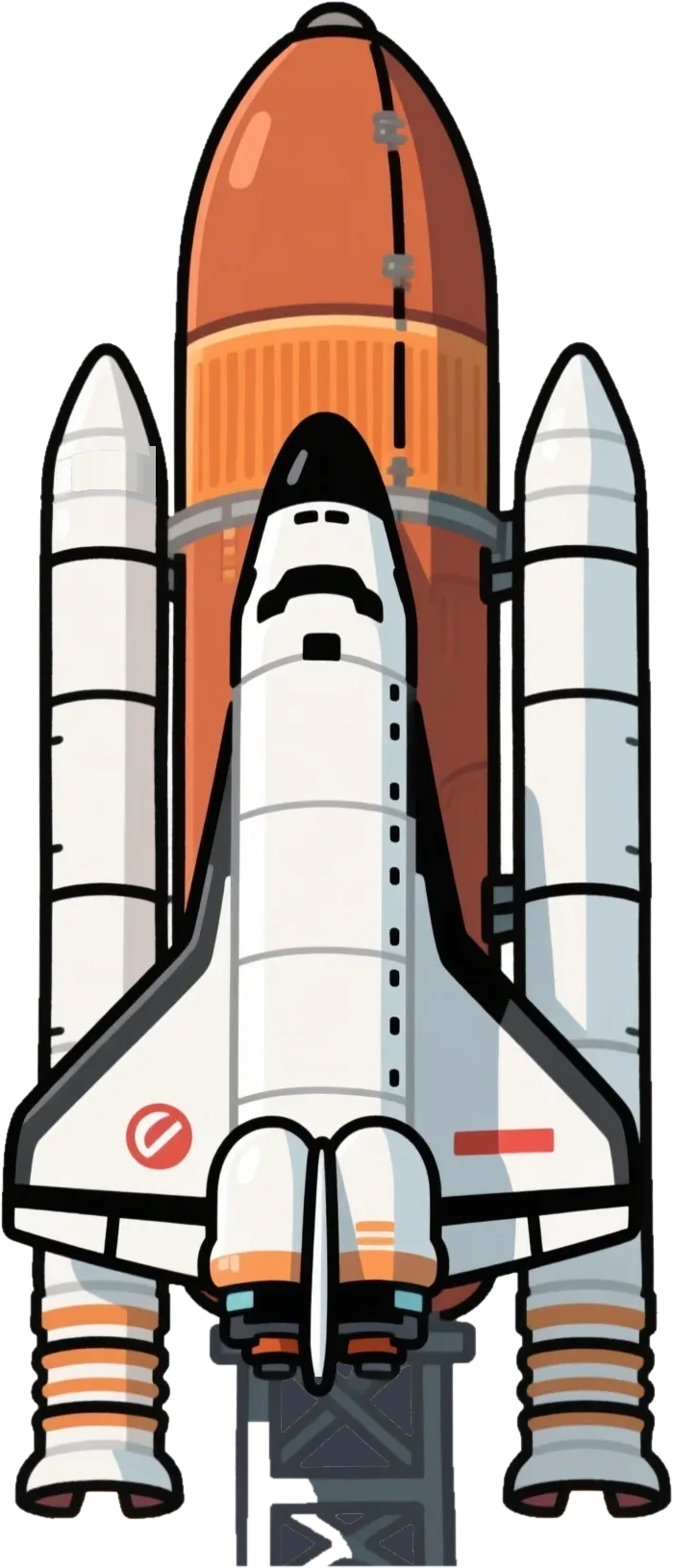
The three big parts
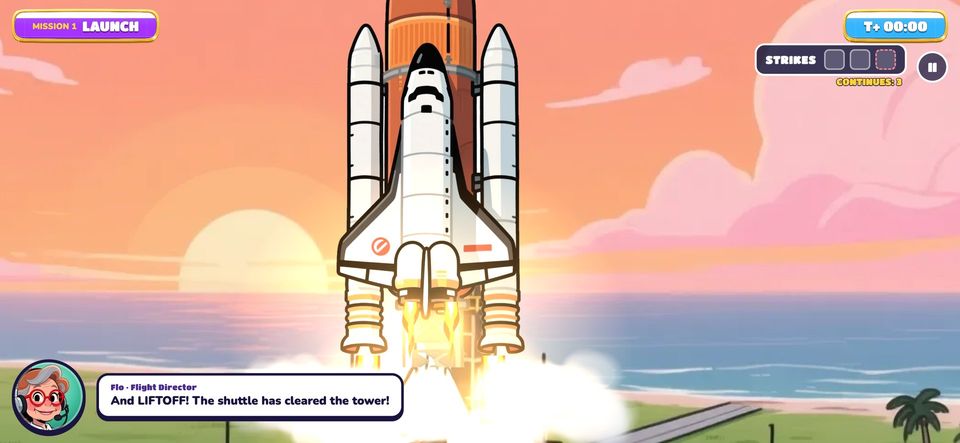
On the launch pad, the Space Shuttle was really three things stuck together:
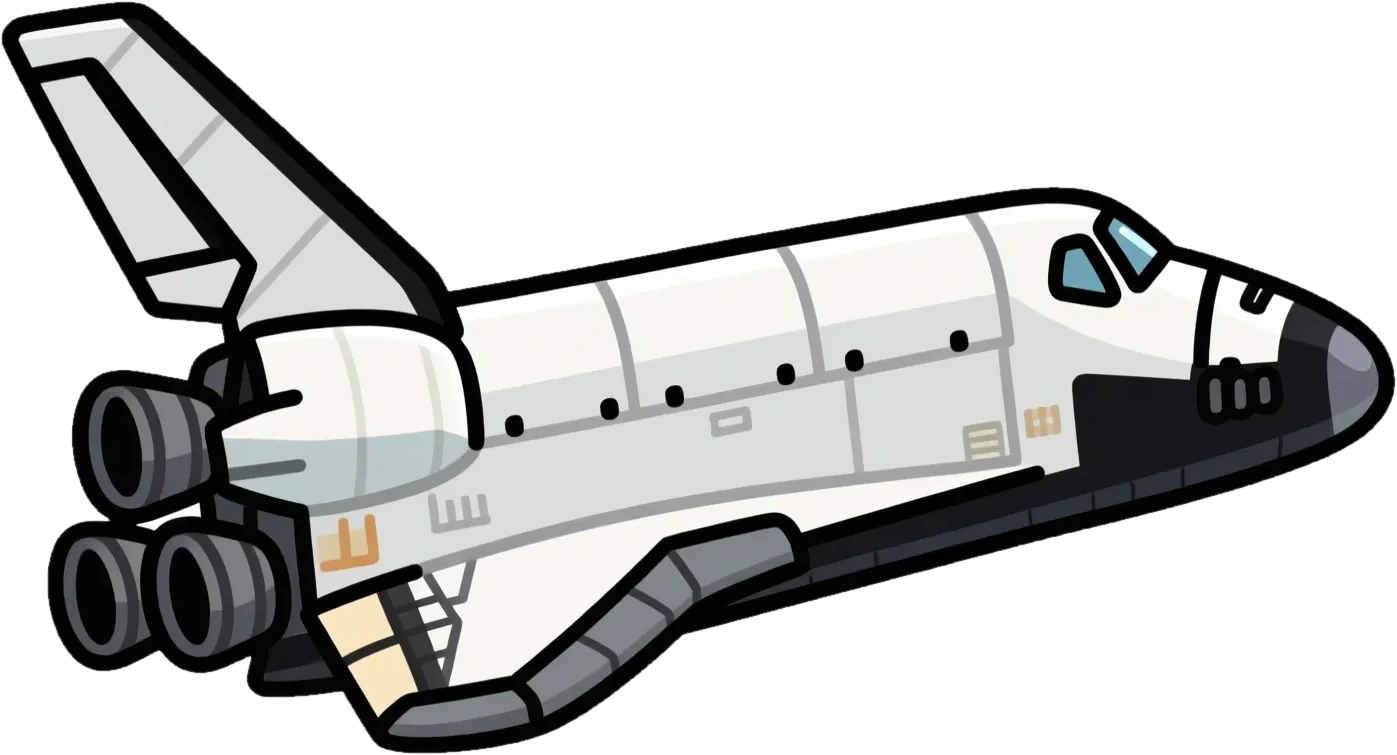
The orbiter
The white part shaped like an airplane. The crew rode in its nose, and the cargo rode in its long payload bay. It had three main engines at the back. This is the part that went to space and came home.
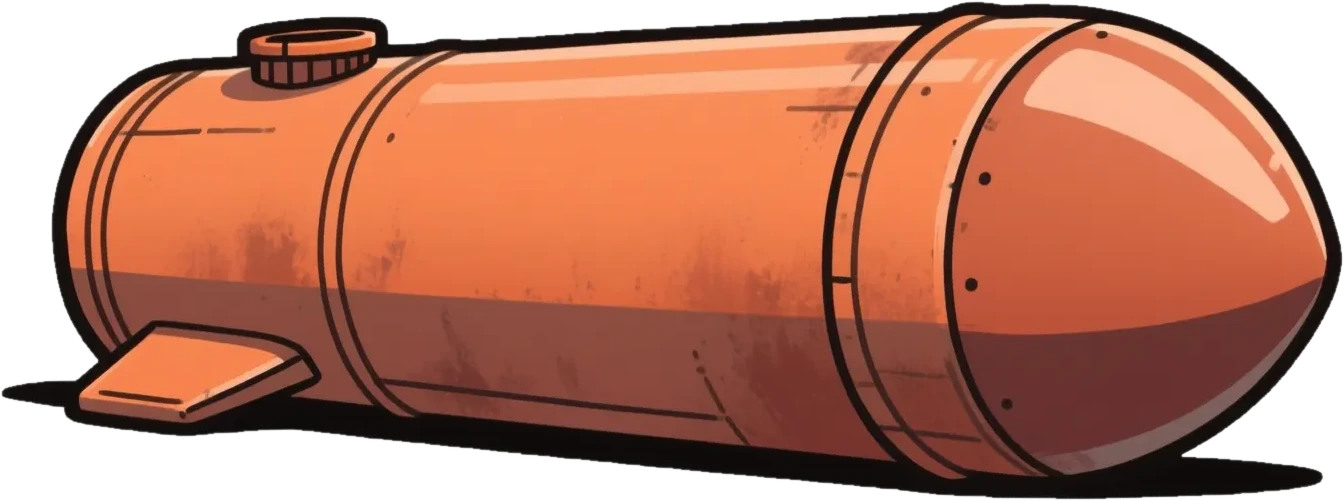
The external tank
The giant orange tank. It held the fuel for the orbiter's three main engines. It's orange because it wasn't painted: that's the color of its foam insulation.
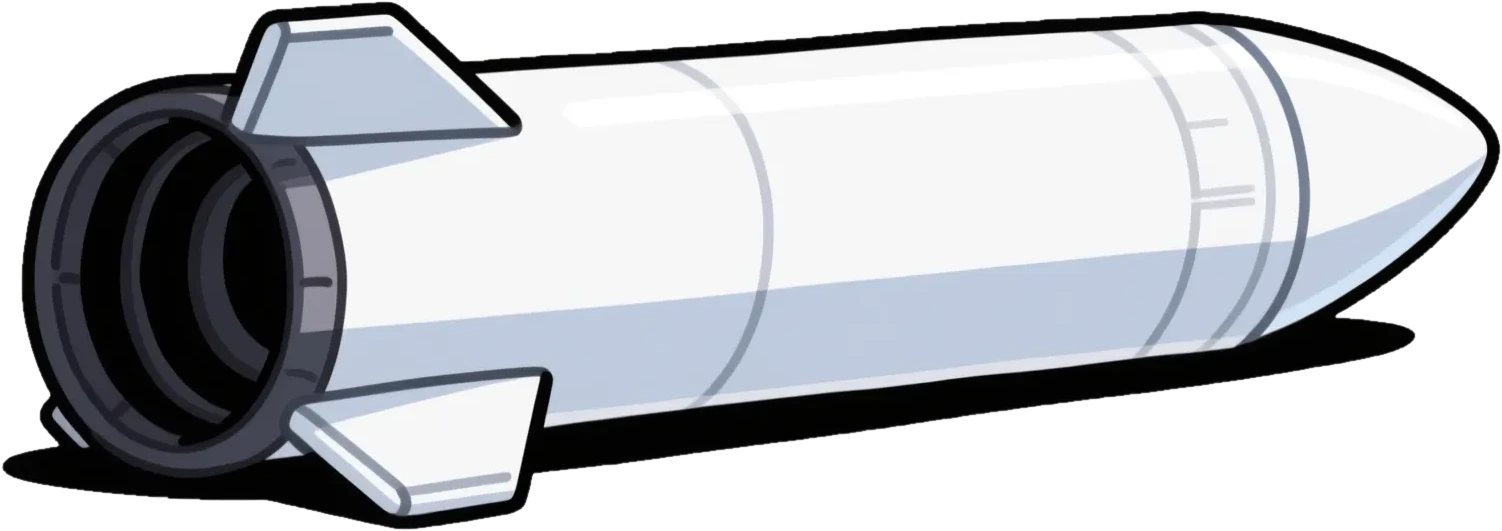
Two solid rocket boosters
The two skinny white rockets on the sides. They gave most of the push at liftoff, then dropped away after about two minutes.
Countdown and liftoff
A few seconds before liftoff, the orbiter's three main engines start up. The whole stack actually sways a little as they come up to full power. Then, at zero, the two boosters light, and once a solid booster is lit there's no turning it off. Liftoff!
As soon as the shuttle clears the tower, control passes from Launch Control in Florida to Mission Control in Houston, and the shuttle does a roll program: it rolls over so it's flying with the crew upside down, heading out over the ocean.
The climb to space
- Rough air. About a minute up, the air pushes hardest on the shuttle. The engines throttle down for a bit so nothing gets shaken too hard, then throttle back up.
- Booster separation. After about two minutes, the boosters are empty. They drop off, float down to the ocean on parachutes, and get picked up by ships to be used again.
- Main engine cutoff. About eight and a half minutes after liftoff, the shuttle is going about 17,500 miles per hour. The main engines shut off.
- Tank separation. The empty orange tank lets go and falls back, breaking up over the ocean. It's the only big part that wasn't reused.
Life in orbit
Being in orbit means falling around the Earth so fast that you keep missing it. At about 17,500 miles per hour, the shuttle went all the way around the planet in about 90 minutes. That's about 16 sunrises and 16 sunsets every day!
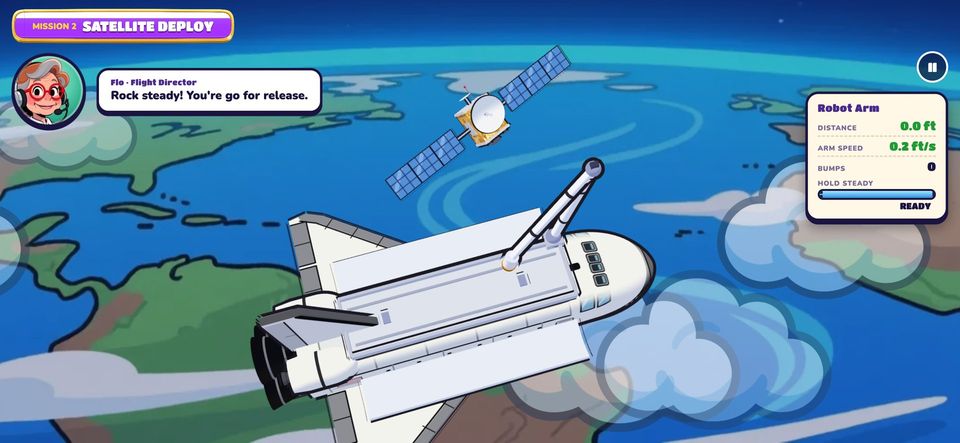
To get into a nice round orbit, the shuttle fired two smaller engines called the OMS engines (say it like “ohms”). Then the real work began. Shuttle crews launched satellites from the payload bay, caught broken ones, and used a long robot arm built by Canada to move big things around. Astronauts on spacewalks even visited the Hubble Space Telescope five times to repair and upgrade it.
The deorbit burn
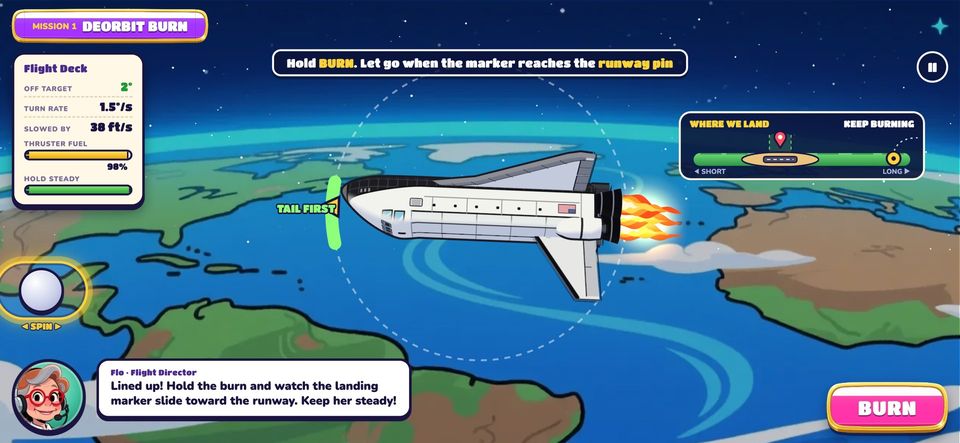
Coming home starts on the far side of the world. The shuttle turns around to fly tail-first, so its engines point the way it's going. Then it fires them to slow down, just a little. That's enough to let the orbit dip into the top of the air, about an hour before landing. There's no going back up after that.
Reentry: riding the fire
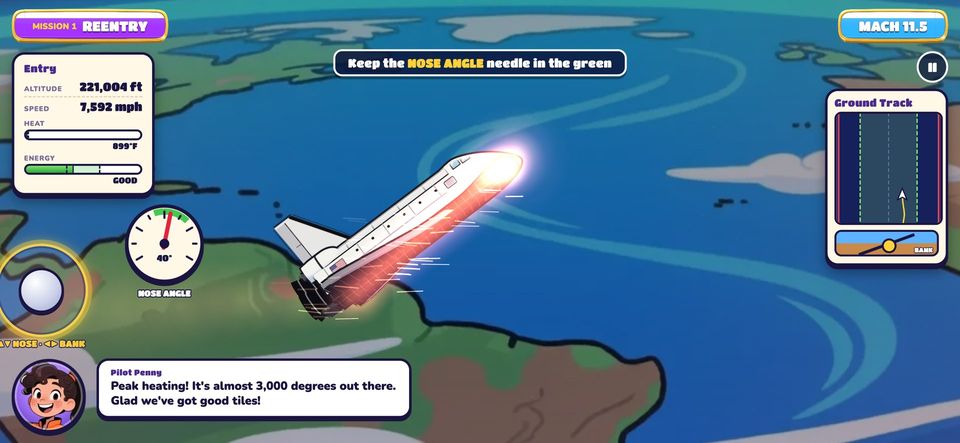
The shuttle comes back into the air belly first, with its nose pitched up high (about 40 degrees). Squeezing through the air at that speed makes the outside incredibly hot: up to about 3,000 °F on the nose and the front edges of the wings. Over 20,000 heat-shield tiles on the bottom keep the inside cool. For a few minutes, the glowing hot air around the shuttle even blocks the radio.
To slow down without going too far, the shuttle flies big S-turns: it banks one way, then rolls over and banks the other way. Each turn scrubs off speed.
How does the space shuttle land?
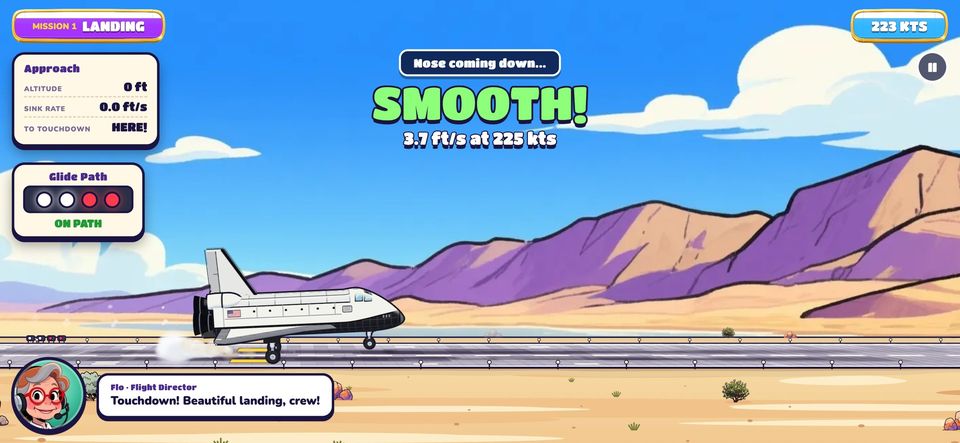
Here's the wild part: the shuttle lands with no engines at all. It's a glider, so the pilots get exactly one try. The approach is very steep, several times steeper than an airliner's, and then the commander pulls the nose up at the last moment (the flare) to touch down gently at about 215 miles per hour. The landing gear drops just before touchdown, and a parachute pops out the back to help it stop.
Shuttles landed on long runways at Kennedy Space Center in Florida, or out in the California desert at Edwards Air Force Base.
Fast facts
| Missions flown | 135, from 1981 to 2011 |
|---|---|
| Speed in orbit | About 17,500 mph |
| Once around the Earth | About 90 minutes |
| Launch to engines off | About 8½ minutes |
| Hottest spots on reentry | About 3,000 °F |
| Landing speed | About 215 mph |
| Engines used for landing | None, it glides |
Questions kids ask
Why was the big tank orange?
It's the natural color of the foam insulation that kept the super-cold fuel cold. The first couple of tanks were painted white, but leaving the paint off made the tank lighter, so the shuttle could carry more.
Why did the shuttle land like an airplane?
It had wings! Earlier American spacecraft splashed down in the ocean under parachutes. The shuttle's wings let it glide to a runway so it could be fixed up and flown again.
How hot did it get?
On reentry, the nose and wing edges got up to about 3,000 °F, hotter than lava. Special tiles and panels kept that heat outside.
Was the shuttle used again?
Mostly, yes. The orbiter flew again and again, and the boosters were fished out of the ocean and refilled. Only the big orange tank was new every time.
Why did it fly upside down after launch?
Rolling over after clearing the tower put the shuttle in the best position for the climb, and it gave the crew a view of the horizon.
The real Space Shuttle was flown by NASA. Shuttle Mission is an original cartoon game; it isn't affiliated with or endorsed by NASA or any space agency. The game simplifies a lot of things, but it keeps the steps in the real order.